
 |
16 Apr 2026 | 21.07
|
16 Apr 2026 | 21.07





Since his recent collaborations with Alexander Zverev and Arthur Fils, the men's circuit has not had Sergi Bruguera on its benches. Will he return to coaching soon? Find out in this interview from Barcelona.
It's always a pleasure to sit with Sergi Bruguera (Barcelona, 1971), one of those figures who speak from experience. Champion of two Roland Garros titles and former world top 3, the Catalan has been coaching for a while now, although currently without a project. Punto de Break had the chance to sit down with him during the Conde de Godó 2026 to review his recent work, assess the Sinner-Alcaraz duopoly, and unravel the potential future successes that destiny may have in store for Rafa Jódar.
We haven't seen you on the circuit for a while.
I'm not with anyone right now. Since I parted ways with Arthur (Fils), I've been at peace. Traveling is hard for me (laughs). I prefer to be here at home with my family, which is why I've been inactive for a year and a half.
Were there no offers coming your way?
Yes, there have been offers, but returning to traveling feels like a big challenge for me. Maybe assisting someone in training here, that could work. But traveling? [...] When you stop traveling, it becomes very tough, it's too many weeks away. Also, traveling to two tournaments with a player means being away from home for a month and a half.
So, the door is not closed then.
I am always willing to listen. I recently spoke with a couple of players who offered me interesting opportunities, but they require traveling for too many weeks. For now, I don't want to.
What would make you change your mind?
A player with the possibility of winning a Grand Slam.
Right now, there are only two.
I would like to think that there are some cases that, with some help, could also aim to win one too (laughs).
The feeling is that after Sinner and Alcaraz, there is a desert.
When there was Nadal, Federer, and Djokovic, it was already something extraordinary. I thought there would be a lot of equality afterward, many players who could win Grand Slams. Now, for two years, they win everything; they are way ahead of the rest. We lack two or three players in that second tier who can compete with them. A Wawrinka, a Murray, a Del Potro... were people who could win a Grand Slam, but now there is none of this profile.
There are many complacent top 10 players.
It is true, there are people who lack ambition, who are already doing very well within the top ten or fifteen. When they are in good form during the week, they reach finals or win an ATP 500, and that's enough for them. I am not in their minds, but it does seem like they have that attitude, not many are willing to strive to reach that higher level that would make them compete with Sinner and Alcaraz.
Who will be the next Grand Slam champion apart from these two?
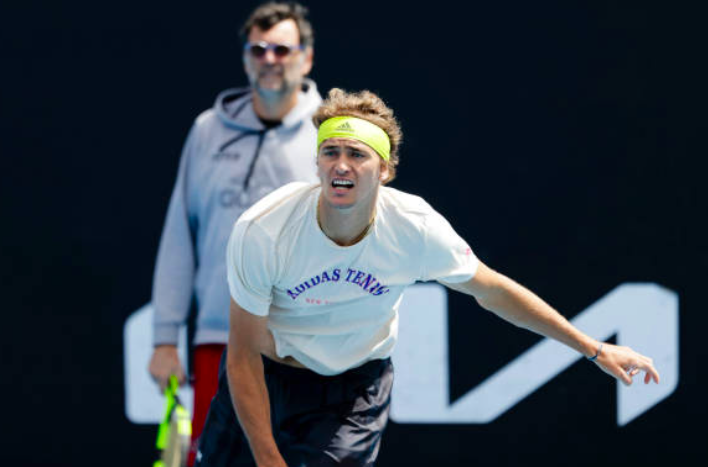
I don't know, I have always thought of Alexander Zverev. He is the only one who has always worked hard, with the ambition to win Grand Slams, he has been close several times. He has reached three finals, in Roland Garros he was a break up against Carlos in the fifth set, but he always lacked that little something. For me, he is the only one who, when facing them, always wanted to compete.
People demand that first Grand Slam from him, but time passes.
It surely weighs on his mind, especially when everyone repeats it every day. When I started with him, he was coming from a very difficult moment, he was not in a good place, but we connected right away. We started in Miami, where he made it to the quarterfinals, but then he got COVID. After that, we had an exceptional clay court season, until he twisted his ankle in the semifinals in Paris against Nadal. He was at his best moment there, anything could have happened in that match, if he had won that semifinal... who knows. Then it took him six months to recover, it took a long time for him to regain form.
Do you think he will end up winning it?
I think so, at some point he has to win it. He's always there, always reaching the semifinals, close to playing the finals, it's just a matter of everything falling into place and having the composure to offer his best tennis at that moment... And if possible, that the opponent is not in the best form either, taking advantage of that moment of weakness to surprise one of the two.
It must be frustrating to always run into the same wall, or rather, the same players.
No player can stop your evolution; at most, it may hinder you from reaching a semifinal or a final. Evolution, if you keep working, will improve and you will gradually acquire the things you lack. Sampras used to defeat me a lot on fast courts, I struggled to play against him, I knew he would beat me many more times, but I would also win sometimes.
Let's talk about Carlitos and his latest injury. Once again, the famous calendar debate arises.
The ATP has made a mistake with the two-week Masters 1000, mentally they become very long. If you win because you win, you're there for a whole month to play two tournaments. What if you lose in the first round twice? You might play only two matches in a month, which is not a very good preparation either.
I have not heard any player supporting this new format yet.
Well, there you have it, if everyone says they prefer one-week tournaments, it's obvious that the players don't have a say (laughs). I suppose it's the ATP and the tournaments that have the final say, but if all the players say that and then the opposite happens...
Have you watched much tennis this past year?
No, truth is I haven't. I know what's going on, I watch some things, for me, it's more about work, analyzing a player or seeing how they can be beaten. I don't sit in front of the TV to enjoy the match.
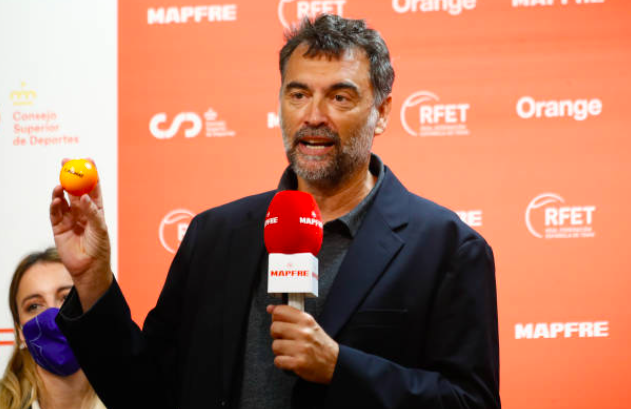
Depending on the day, there are times when tennis seems to lose attractiveness in exchange for being more powerful.
In all sports, there is always that evolution, that question repeats itself every season and in all eras, in all sports. Tennis had its big change when the surfaces were equalized and the balls became so heavy. That tennis of players with little strength, a lot of talent, and great ball impact disappeared. Now, to move these balls, you need the strength of a horse. Nowadays, you see the same match on all courts, I remember playing in Hamburg with very slow clay and heavy balls, but then you went to Rome and it was super fast during the day, it was a different story.
This is where an anecdote would fit.
I played the Hamburg semifinals against Ivanisevic, he beat me 7-6 in the third set, the only time he beat me on clay. Then he lost to Medvedev, but the following week he got his revenge in Rome... and then I beat Goran. Now you can find indoor courts slower than clay courts, this is incredible! In Wimbledon, training on grass, you can see people hitting the ball up to have all the time in the world, back in my time you couldn't play like that at all.
If everyone plays the same on each surface, will all players end up playing the same?
What happens is that you will always encounter the same style of play, the one that causes the most damage. For example, I remember a match at Roland Garros against Eric Jelen that was 5-7, 7-6, 7-6, and 7-6. He served and volleyed on my first and second serves... and on his first and second serves. There were no baseline points! Now that's impossible, seeing a player serve and volley or return and volley is a miracle, it's much harder with such slow conditions, you really need a great volley.
Recently Arthur Fils was criticized for saying he doesn't watch much tennis, what do you think?
Being part of the tour, he may not watch much tennis, but with me, we studied players, watched bits of matches, analyzed and discussed strategies, etc. This profession can be very demanding, but of course, he watches matches, maybe just not entire ones. After breathing tennis all day, it's normal that when you get home, you may not feel like watching more tennis.
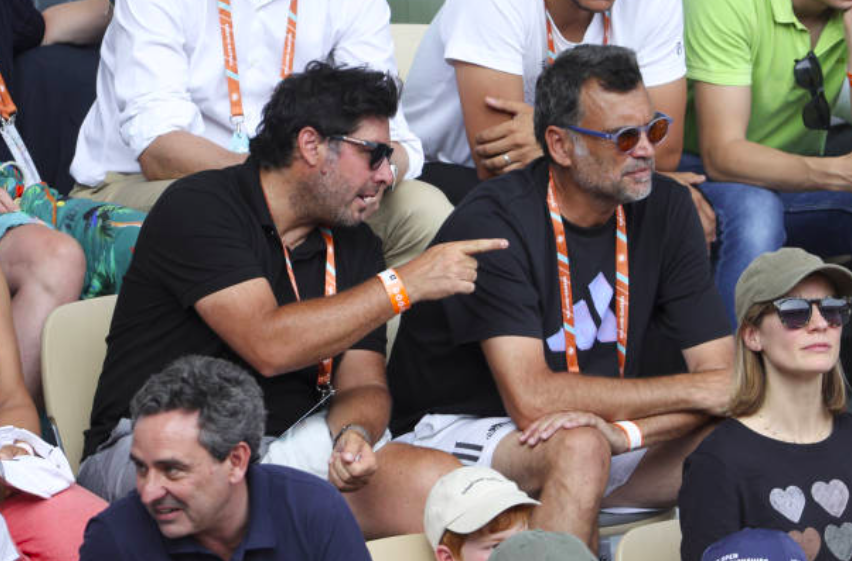
Now he's making a comeback after a rough patch.
He's had bad luck with injuries, which hindered the progress he was making, but now he's more mentally mature and physically outstanding. That is crucial to compete with Sinner and Alcaraz; you need to be a beast physically, otherwise, it's impossible to face them. Arthur is one of the few I see capable of competing with these two, although he still needs a bit more stability and consistency, but he has the potential.
In a few years, when he enters the top 10 and wins a major title, you'll remember the time you spent with him. Do you feel like you left that project unfinished?
It depends on how that end was, at that time I didn't want to travel anymore, I wanted to stop, I was mentally a bit tired. It was my decision, but of course, if there comes a time when you want and the other doesn't, a moment when everything breaks apart to later see him take off from a distance, I understand it hurts more. I am convinced he will make that leap; at that time, he was a bit raw in certain aspects, he just needed time.
Going back to Carlitos, now that he has completed the Grand Slam: When will he stop surprising us?
The first time I saw him was at the Davis Cup we played in Marbella, I watched him train all week. Then he reached the semifinals in Indian Wells and won in Miami, it was his breakthrough year. I remember training with him and quickly calling my father: 'Dad, I saw something I hadn't seen in ages'. What I thought was: 'I don't know how they're going to beat him when he's at his best'. At that time, he was #35 in the world, but he was already impressive.
Did something similar happen with Rafa?
With Rafa, I experienced him winning, because at 17-18 years old, he was already beating the best, at 19 he won his first Grand Slam, it was too fast. These people, like Federer, Djokovic, Nadal, they are all like that. It's really rare that something can surprise you in a sport where we've seen so much, but sometimes it happens.
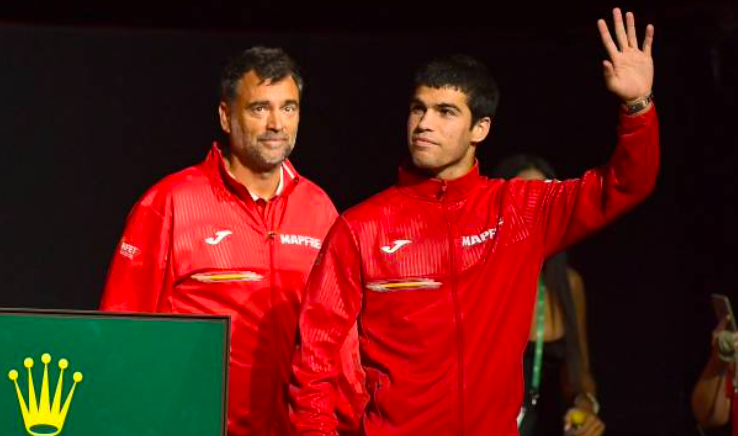
He says he wants to be the best in history.
I see him capable, of course. Look at how he is, look at the numbers and, above all, look at the difference with the other players. Right now, he doesn't have to compete against three or four who can beat him, he just needs to keep an eye on Sinner, because with everyone else, he has a lot of margin. Starting to win at such a young age, having already conquered several Grand Slams, I am convinced he will fight for it. If he says it, it's because he really believes it, the important thing is to see how he wins, how he enjoys it, that attitude helps him have fun while doing incredible things on the court.
The Ronaldinho of tennis.
He has everything, capable of doing marvelous attacking plays, touches, impossible defenses, recovering plays that don't even exist, he truly has it all.
What do you think of Rafa Jódar?
I haven't seen much of him, but he has already shown a lot of character and experience, which is very important. From what little I've seen, mainly looking at his results, it's clear that he has a well-grounded mind, which is key for growth. Regarding tennis, we need to wait a bit longer to see which aspects he continues to improve, although I insist that I haven't seen him live yet, and the feeling there is completely different.
Many don't understand why he travels only with his father, although he's doing well. Is it just a matter of time before they add another person?
In the end, it depends on what you want: if you want to win Grand Slams and become World No.1, the more help you have, the closer you'll get. I'm not saying he should travel with 8 people; to me, that's excessive, but traveling with a tennis specialist professional? That would be ideal, having other opinions close by. The more you know and experience, the better to keep multiplying your experience. Now that he's growing, if he's traveling with his father only, it's fine, but if he could find a tennis-specific person who can connect with the group's mentality, it would be phenomenal.
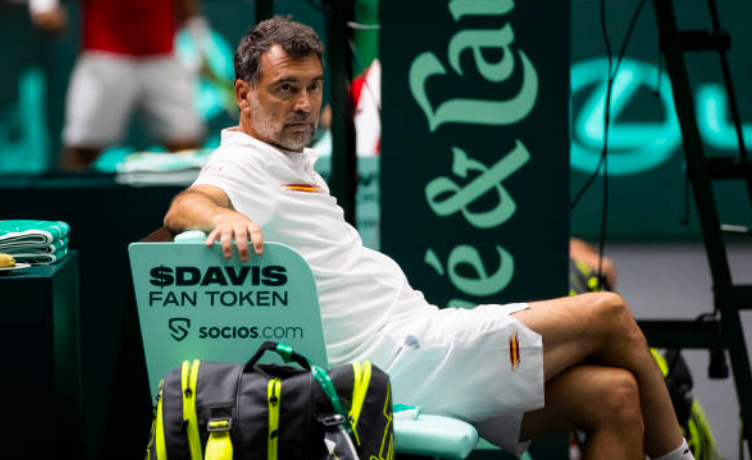
You also used to travel with your father. Was it difficult for you to incorporate other voices?
In that aspect, I was very forward-thinking. The first time we went to Australia, for example, we hired Bob Carmichael, an Australian player, to help me improve my serve/volley game on fast courts. Sometimes a coach is afraid to invite a second voice for fear of losing their position, but my father's goal was for me to play the best I could. Later, we also hired Pepe Higueras. I spent a year with him, and he traveled with us for several weeks, teaching me things that my father couldn't reach.
For example?
He helped me transition from clay to hard courts, for example. He aided in improving many aspects of my game and mental approach. I was also among the first to travel with a physical trainer to tournaments. Pete Sampras started traveling with a physiotherapist during those years, so I followed suit and began traveling with Paul Dorochenko, who assisted me in both areas. Having specialized people around is always good; they contribute a lot on a daily basis, so I'm pleased to have been one of the first to do it. My father couldn't know everything; perhaps he had the information, but applying it was the hardest part.
Nadal, Alcaraz, and now Jódar. Some dare to put them in the same line.
Let's see, Alcaraz is a reality, that is clearer than water. I didn't think we would have another like him after Rafa, but not even close, so with Jódar, it seems we still have to wait a little. Honestly, he hasn't done absolutely anything yet, he can't be put on the same level as someone who has already won the four Grand Slams, it seems ridiculous to me. Maybe in the future he will achieve it, it's possible, but until he reaches a semifinal or final... and even then, not even by winning a couple of Grand Slams can he be compared to someone who has won 22. There would still be a world of difference.
This news is an automatic translation. You can read the original news, Bruguera: “Veo a jugadores con mucha falta de ambición”





-
 18 Apr 2026 | 22:00Son, about Jódar: "His game is more similar to Sinner's than to Alcaraz's"
 -
 19 Apr 2026 | 07:00Rublev: "I am improving the management of my emotions"
 -
 17 Apr 2026 | 19:00Son offers opinion on Jódar before facing him in Barcelona
 -
 18 Apr 2026 | 15:00Cobolli: "I have played one of the best matches of my life"
 -
 18 Apr 2026 | 18:00Jódar leaves Barcelona with head held high after falling to a great Fils
 -
 18 Apr 2026 | 07:00Sinner's reasons to play or not the Mutua Madrid Open 2026
 -
 18 Apr 2026 | 11:00This will be the Mutua Madrid Open 2026, with a wide range of title contenders
 -
 19 Apr 2026 | 10:00This is the seed order for the Mutua Madrid Open 2026
 -
 18 Apr 2026 | 19:00Jódar: "I must learn from my mistakes and keep working to be better"