


 |
15 Apr 2026 | 22.30
|
15 Apr 2026 | 22.30





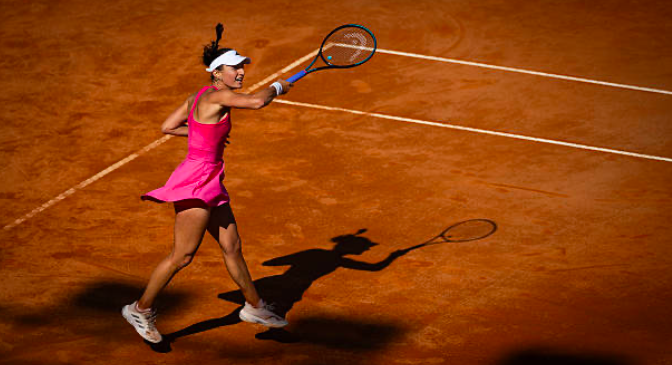
Elina Avanesyan has had a really tough time. At 23, she already knows what it's like to climb up, but also what it's like to be struck down by a complex illness. Fortunately, today, the Armenian is already on the sweet path back.
It's strange to have to go beyond the top 300 to find the name of Elina Avanesyan (Piatigorsk, 2002). That woman who broke into the top forty in the world with significant victories, using that combative counterattack style, halted her progress since March 2025, when mononucleosis left her future uncertain. How do you cure this? And most importantly, when? Many months have passed where patience was pushed to the limit, but the Armenian knew how to wait, and now she begins her journey back. Punto de Break sat down with her at the WTA 125K de Madrid after reaching the quarterfinals coming from the qualifiers.
It's been a long time since you played so many consecutive matches.
I had been trying to come back from my injuries for almost a year, taking some time to regain confidence and accumulate matches, so I am leaving Madrid very happy. I can see certain improvements in my game, but I try to take it day by day, not thinking too much about what might happen, just staying in the present and trying to give my best.
You've been lacking some luck this past year.
I had several injuries, especially in the shoulder, in addition to suffering from mononucleosis. I tried to come back, but the pain persisted, and it was frustrating.
I understand that mononucleosis was the worst.
At first, yes, but the shoulder was also very painful. I began to feel better health-wise gradually, trying to come back all the time, but it's frustrating to accept that something like this is happening to you. I don't know, I suppose everything happens for a reason, I hope that having overcome these adversities means that great things await me in the future.

Frustrating because it's a disease without deadlines.
That's the hardest part about mononucleosis, which at the same time delayed my shoulder's recovery. You see how a week goes by, two weeks, a month, two months... the thing is I never stopped training, I didn't know how long this problem would stretch out, all I know is that both injuries coincided and made the recovery much longer. Now I am much better, fortunately feeling more and more confident on the court.
Did you play tournaments with mono?
Yes, I tried, but I realized it was impossible to compete. I was very motivated at Roland Garos, for instance, where I usually do well, but as soon as I started playing, I struggled to score a simple point, I had barely any strength to run. It was a shame, one always wants to do well in these big tournaments, especially at Roland Garros.
What are the symptoms?
You're very tired, have no energy, struggle to concentrate... basically, taking two steps feels overwhelming, and you quickly feel exhausted.
How did you realize you had it?
After Miami 2025, I started feeling that something was off, so I stopped for about two months to recover. However, during that time, everything turned out worse than expected. Despite maintaining the same training routine as in previous years, the fatigue was much greater, indicating an internal issue. Months later, I finally decided to get a blood test, which revealed a positive result for mononucleosis. When diagnosed with this disease, they recommend stopping at the outset, something I didn't do, so later I had to proceed very slowly in recovery, gradually regaining energy. The hardest part was accepting that I was still not ready to return.
Ancic or Soderling had to retire for not overcoming this illness. Did you fear the worst?
We all have thought about that at some point, but I always tried to stay positive, having experienced other recoveries in my career. It is crucial at that moment to stay calm and focus on the good things, not the potential negatives.
How did you discover you no longer had it? Another blood test?
No, analytics teach you that you still have it in your body, the important thing is to start feeling better each time. You have to have occasional medical follow-ups, as well as test your abilities. For example, here, I was quite tired after playing so many consecutive matches, but I understand it's normal because it had been a long time since I did it. I'm still in that recovery process, accepting that I have to take it step by step.
Serious question, can it come back?
Normally, no. You usually experience it once in your life, then you develop antibodies.
Let's talk about your tennis, the challenge of competing without a super serve.
I know I don't serve very well, even worse after the shoulder injury. I work knowing that I will never have a super serve, but I can improve it. I try to always be there, seizing every opportunity, now aiming to be more aggressive, waiting for that moment to go for my shots. It will take me some time to get back to the level I had a few years ago, I have to improve a lot physically, find that rhythm again.

You were once in the top 40, I imagine the goal is to get back there.
Sure, even though maybe this time it won't be as quick, but it's necessary to go through that. I desire it very much, I'm looking forward to going back to where I was, that's why I have the daily motivation to train, no matter how long it takes. Six months? A year? Two years? I don't mind, I want to be there again, but without thinking about it all the time. If you think about it too much, you create certain pressure for yourself, which is not good in daily life. Today I'm focused on what I can do, staying in the present and walking this path back.
You are known for your outstanding composure against the top 20 players, how did you manage to transform yourself on those days?
It's always a pleasure to face the best players in large stadiums, every time I was in that position, I thought I had nothing to lose. I just went out to enjoy, to show my style of play and focus on my tennis. Sometimes I had to make some adjustments, of course, but ultimately, these are the matches that you remember the most, the ones that stay with you. It's a pleasure to compete without anything to lose, enjoying all the factors around you, that's what the big tournaments are about.
Now it's the other way around, at these levels few have your reputation.
Well, now I'm #400, my ranking has dropped a lot (laughs). I'm in the present, I know it's not my best moment, but I also don't dwell too much on things to avoid creating pressure on myself. The ranking is a very unstable element, I've struggled a lot with it in the past year, but I'm motivated to get back up. I try to shake off all that weight and enjoy my work.
You have been training in Spain for several years, what has this country given you?
I am normally very calm, but in Spain I always found people who are very passionate about what they do, and I love that. I will never be 100% Spanish in that sense, but I have learned many things from all the people who have accompanied me. Now I express my emotions more on the court, which was very challenging at the beginning since it used to be the opposite.
Why did you choose Spain?
It was a somewhat spontaneous decision. I needed to leave my country to seek an extra push, so my parents told me about Spain, where people love tennis and there are many opportunities. We realized it was a good place to go, looking for that improvement to help me take the next step. I spent a few weeks trying out various places until I settled in Alicante for a year and then moved to Valencia.

Do you miss your home?
Well, it's years of sacrifice, hard work, not seeing your family too much [...] In the end, you accept it, it's the path you have chosen, the best possible path at that time. I always felt fortunate to have this life, so there isn't much more to do. It's the path I've taken. Spain is a great place to live, really (laughs).
In 2024, you changed nationality and started representing Armenia. What does that mean to you?
It is a great honor, Armenia, the country of my parents, was a super important decision for me. There are not many players in Armenia, so I feel that extra motivation to be an example for Armenian children. Every time I come back home, I try to spend time with them, do many activities, interact with the little ones so that they can also get to know me, inspire them in some way. It's very fun, they always have many questions for me (laughs). Hopefully, they can find their way, and hopefully, many will want to dedicate themselves to tennis in the future.
There were people who criticized you.
There will always be people out there to criticize everything you do, but also people who support your decisions and understand why you make them. I am lucky to have my family and friends close by, everyone is super happy, that's all that matters to me at the end of the day. If my people are happy, I am happy.
Do you set yourself any goals by the end of the school year?
I haven't set myself anything, I just want to be healthy, that is the most important thing right now. I need to get back to being physically well to aspire to be where I was before; that would be a big leap for me. Beyond this, I haven't thought about any ranking or result goals, I still have a lot of work to do in this comeback process.

Do you have any dreams?
I am already living my dream, doing what I love, traveling around the world, and meeting amazing people. I have already achieved great results in my career, working to improve them someday, but I am aware of the life I have, I cannot complain at all. I will try to enjoy even the adversities that arise because that will make me stronger. I love to fight and bring out that survival instinct. No matter how many bad things may come, I know that the positive aspects will always weigh more.
But the circuit is not as beautiful as you depict it, what about the insults on social media?
That affected me a lot at first, but now I don't pay as much attention to it. These are things that are there, all players suffer from it. You lose 7-6 in the third set with match points in your favor and... imagine what you find when you pick up your phone. In those moments, it's better not to visit social media; mentally, it's very tough to deal with that, but one has to stay strong to avoid falling into depression. Here in Madrid, for example, people react very strongly in every match; I don't think it should be like that; they should show a little more respect for the players. We need to work on this because it's a problem that exists.
Is there a solution to this problem?
I hope there is; we talk about it a lot among the players, but we also don't know how to remedy it. Perhaps organizations can find a solution to this problem.
This week in Madrid, the police came and removed two people from the tournament.
Wow! We definitely have a lot of work ahead of us.
This news is an automatic translation. You can read the original news, Avanesyan cuenta su batalla contra la mononucleosis: “Me venía grande dar dos pasos”


-
 20 Apr 2026 | 15:00This is the plan that Alcaraz will follow to try to recover his wrist
 -
 20 Apr 2026 | 22:00Alcaraz: "Forcing at Roland Garros could harm me in the future"
 -
 20 Apr 2026 | 16:00Swiatek explains why she chose Francis Roig and how training with Nadal went
 -
 20 Apr 2026 | 16:00Landaluce talks about his rivalry with Jódar before his debut in Madrid
 -
 20 Apr 2026 | 19:00Alcaraz admits he does not know if he will be able to compete in Roland Garros
 -
 20 Apr 2026 | 07:00Rybakina fully enters the fight for the number 1 in the world with Sabalenka
 -
 21 Apr 2026 | 09:00Alcaraz: "The best version of myself will come in a few years"
 -
 21 Apr 2026 | 08:00Andreeva explains how she learned to live with the pressure


