


 |
13 Apr 2026 | 22.16
|
13 Apr 2026 | 22.16





This Sunday marked the grand finale of a week where tennis took center stage in the capital of Spain. The Challenger 75 and the WTA 125K tournaments in Madrid highlighted the city on the map, events that we could analyze with José Luis Rascón.
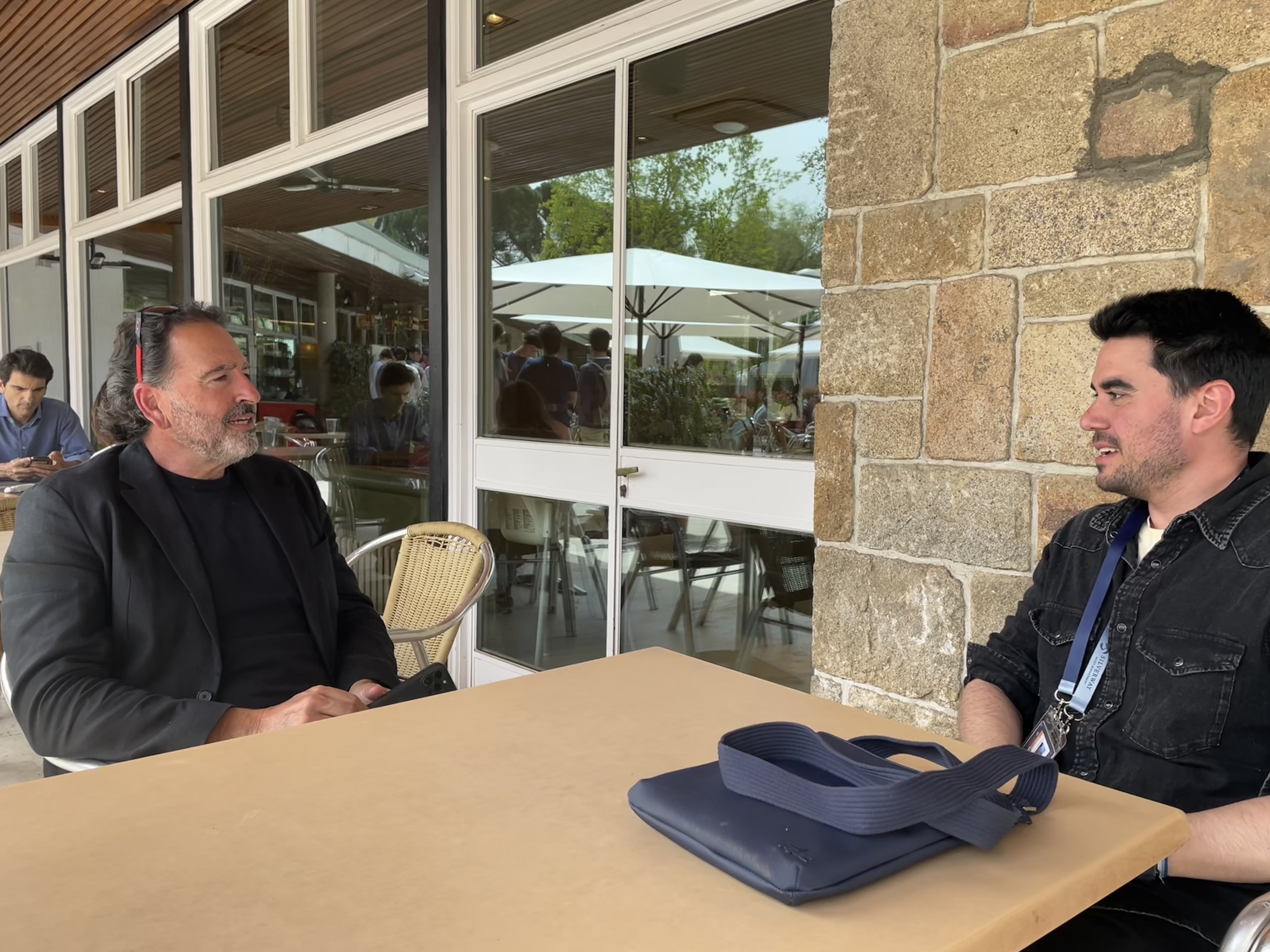
Known as 'Tati' Rascón (Madrid, 1971), for the past ten years, his role has been as the director of the Federación de Tenis de Madrid, a position of interest these days. Why? Because looking at the rankings, it's impossible not to get excited about the performances of Rafa Jódar, Martín Landaluce, or Rafa Jódar, three talents who promise to soon join the top 100 and lead this new generation of Spaniards. Punto de Break sat down with Tati to assess this surge of talent in the capital, but also the work that still needs to be done so that this cycle of talent keeps spinning.
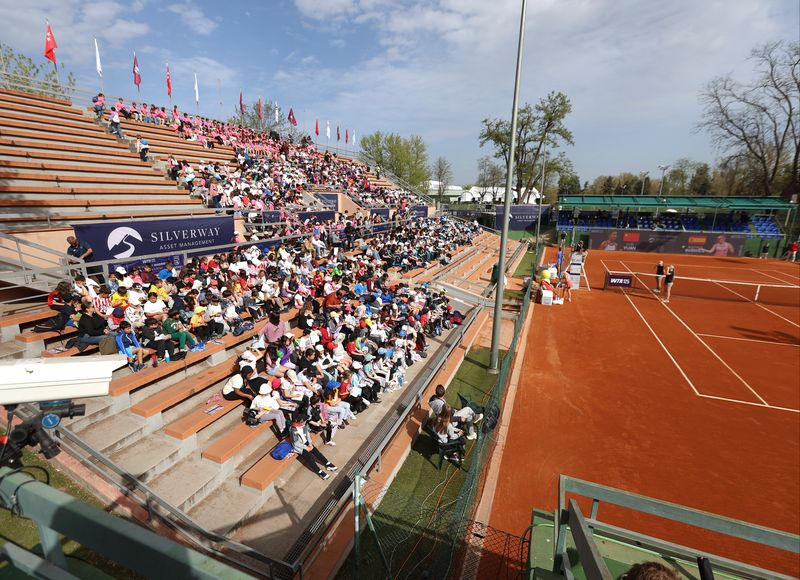
It may not be a Masters 1000, but this week in Madrid is not bad at all.
This is a more family-friendly tournament, more enjoyable for fans; in the end, you are very close to the players, both on the courts and throughout the venue. Beyond this, it is a tournament that has enjoyed a very high level of players in both draws, so for us, as a federation, it is a pleasure to organize these two tournaments. The idea is to sustain and gain importance, although hopefully, we can continue to grow.
This year, you combined both draws in the same week, downgrading the Challenger and upgrading the WTA. Why?
Challenger tournaments depend on the ATP and the 125K on the WTA, it's not like an ATP 250 where you have your week and can manage it as you see fit. Here you are at the mercy of the movements in Europe, for example, this week there was a 125 Challenger in Monza, so they don't allow having two competing tournaments in the same week. They preferred to promote the one in Monza more, so to compensate, they proposed changing the WTA week to also maintain the category of the other tournament.
Why switch to another week...
It wasn't convenient because this week is very good within the calendar; it's right where the list closes for Roland Garros, so there are players who arrive with the ranking on the edge to be able to earn points. From now on, this will generate a very clear competition for us because if Monza continues there as a Challenger 125, we won't be able to grow... for that, we would have to move to another week, which is not of interest to us at the moment.
The truth is, the place is impressive.
We have to thank the Real Club de Campo for letting us use these facilities, I say this because I know very well the day-to-day life of clubs and the relationship they must maintain with their members. They believed in the project from the beginning, and the relationship is great, although we know that holding these two tournaments in a single week is a hassle for the members.
Why?
Because of the spaces we occupy, the parking situation, the loss of privacy… hosting two tournaments in the same week not only requires a huge effort for the club and the members, but also for us. Logistically, it is very challenging, in addition to the requirements imposed by the ATP and WTA to maintain the category of each tournament. It has been a very significant challenge, but we are very happy with the result. Organizing an event of this magnitude in Madrid is not easy; it demands many requirements and facilities as extensive as these.
Will you repeat in 2027?
We take it year by year, unlike an ATP 250 tournament, which, apart from being yours, is an asset. Now, when the tournament is over, ATP/WTA conduct an analysis, a kind of feedback on how everything went to compare it with other tournaments held in Europe during the same week. Based on that, they have the power to keep the tournament, propose a change of week, or downgrade its category. You are completely in their hands.
If it were up to you, there is no doubt.
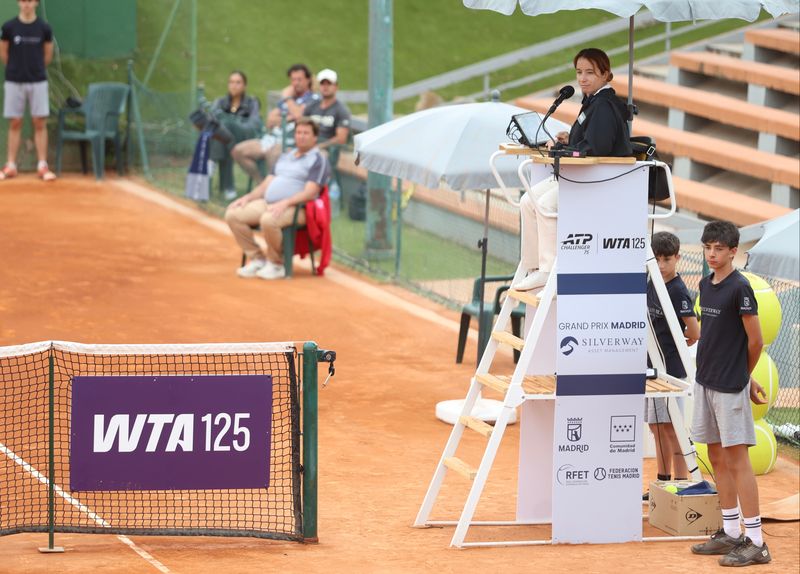
We want to hold both tournaments in the same week, we wouldn't change that. Today we know what aspects we need to strengthen to improve; there are certain areas that need to be enhanced to accommodate 160 players at the same time and meet all their needs. We will see what plans they have for next year.
We need to talk about the gamblers, one of the major issues that this tournament always faces. Can this be combated?
From our side, zero tolerance on this issue. Tennis is about respect, values, effort; we have experienced all of this since we were young, so it is essential that players can compete in an admirable environment where they can be at peace... but it is also true that this is something we cannot control. Unlike other tournaments, here people are very close to the players, anything they may say reaches them faster. We have tried to strengthen security; we have increased our number of controllers from 5 to 20, although there are moments when it is uncontrollable.
And what is the plan to eradicate it?
When someone crosses a line that should not be crossed, invite them to leave the court [...] It is a complicated issue, it exists in all tournaments, but here, at certain times, it has been magnified, as if it were a Davis Cup. No one likes to see that, but it is not easy to control.
Do tournaments benefit from betting?
The tournament does not benefit; on the contrary, it harms it. I am not an expert, I understand that this generates a lot of money, but I think of something very simple: whoever is selling that information so that people can bet, should not sell it. If in some way the result you are watching is not immediately available for you to bet on... that is what fuels everything else that happens afterwards. The key is to sell that data; if you don't have it, you can't bet. But, well, the one who loses the most in this matter is the organizer and promoter of the tournament, who ultimately has to control it without promoting it.
And what about death threats on social media?
Everything in life has its good and bad sides. Social media has many good aspects, for example, the visibility a tournament can achieve, but it also has its downsides. The key is to balance or minimize them. Handling the harassment that players face is very challenging, but I would love to have the solution to stop it at its roots.

Let's talk about Madrid tennis, which is trending.
These players are feeding off each other, and that's beautiful. When you share a generation and have grown up together, when you see one achieving great results, it opens the door for you to try to do the same. All of this creates a very healthy competitiveness that leads to all the nearby players achieving better results. Madrid is experiencing a magical moment; there has never been a generation like this in the history of young Madrid tennis players with such potential and already consolidated, although they still have much to improve. I'm not just talking about Madrid; these players are going to be around for a long time at the national level.
Was it random?
Well, you always need a bit of luck, but I believe a very healthy ecosystem has been created through the clubs. All these players come from clubs and schools, having been with coaches who have trained them so well.
Can a medal be awarded to the FTM?
I would give it more to the clubs than to the Federation. The engine of tennis in Spain is in the clubs and everything they do with their schools, their tournaments, and their social life, with everything that motivates them. That does not exist in any other country in the world, that's why when they ask me what the secret is for having had all these players for so many years, I always refer to the same four key points.
Wait, let me note it down.
First are the clubs, a fundamental part. Incredible coaches at each stage, former players who weren't that good but made their players very good. Tournaments, in proportion to countries that have Grand Slams – 450M€ against the 9M€ we have here – we can say that in Spain you can play absolutely everything, at every level of the pyramid. Finally, the climate. There is a very well-formed ecosystem to which we should add one last factor: the race. Our players have a competitive drive that is key in this sport.
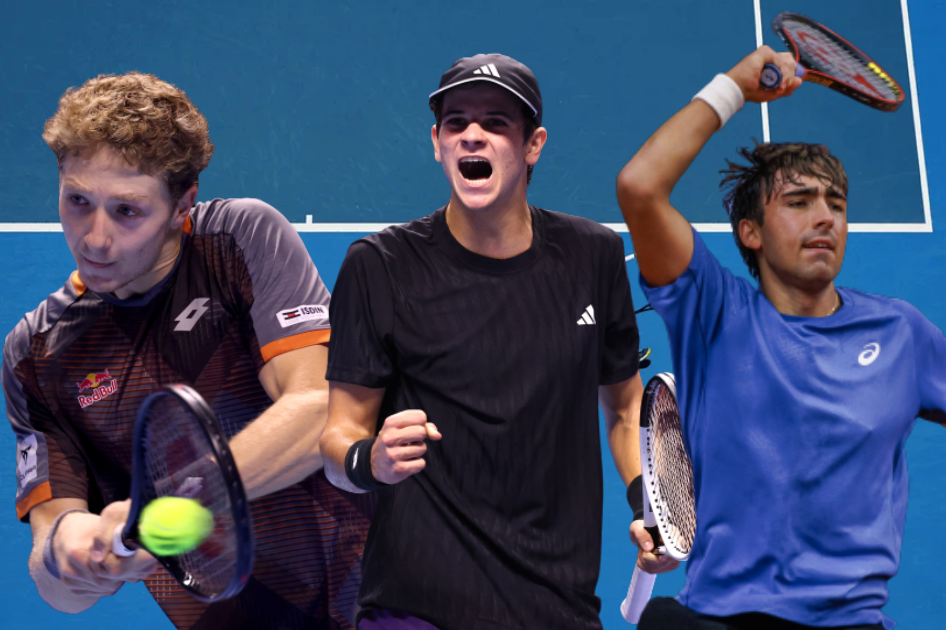
Jódar, Landaluce, and Jódar. Are you brave enough to set the bar for them?
It would be risking too much, you know the difficulty of tennis, even if you are very good, a thousand things can happen along the way. What is clear is that having players like Mérida, Landaluce, and Jódar is a privilege, with two of them being Junior Grand Slam champions. Jódar's progress from #911 to #57 in a year confirms that we are facing a special player, just look at the data. Then each one will follow their own pace, but they all have very positive attributes, they have shown that they will be there, now we will see if they continue to improve every day and can maintain that progress. Due to their youth and the situation they are in, they will determine their own limits.
What makes Jódar so special?
He is mentally strong, he stands out in the mental aspect compared to others, he has shown this since he was young. I was at the Jeddah #NextGen and watched Landaluce and Jódar play, perhaps Martin didn't have as much confidence at that time, but Rafa against Tien left me amazed. In fact, I said to my colleague: 'This guy is going to be a bomb.' With that performance, above the physical or technical aspects, he won me over with what he showed me at a mental level. That is what has enabled him to go through all these stages so quickly; that's where you see his capabilities.
What advice would you give him to keep everything on track?
May they protect him. However mentally strong he may be, one is not prepared to live through all these things. Like everything in life, you need a certain experience, maturity, and the ability to channel everything correctly. It is crucial that they protect him in everything that happens from now on, that they shield him from everything that is unrelated to what he needs to develop. He should only focus on those things he is really good at, striving to be a better player every day while his environment handles everything else.
His father is his coach, the person who travels with him. A brave decision that currently works.
When something is going well for you, why change it? Even if you do change it, for whatever reason, you could destabilize something that is already stable. For me, what Rafa has done with his father is on another level; I know very few cases like this. His father is a physical trainer, familiar with sports but not with tennis, a very technical and complex sport. The fact that Rafa followed him and they have achieved where they are now means they have done everything very well, they have found a balance worth maintaining for life. What about the future? Well, if at some point you need reinforcement to improve in something very specific, I think adding another voice would be interesting.
Why has Madrid never produced such a good generation before?
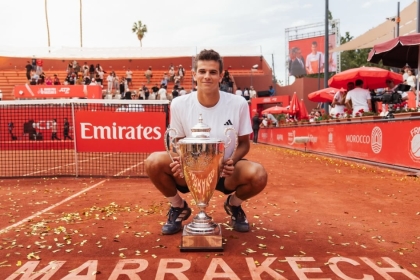
Madrid has some brutal grassroots and training schools, some of them have over 500 students, but the coach who is highly focused on these schools goes home every day, without the need to travel or invest in the logistics required by high-level competition. When things are going well with what you are doing, at home, properly balancing family life and making a living, it depends a bit on each one's vocation. Here we never had those competitive academies that Barcelona or Valencia had, we never had that infrastructure for coaches to travel to tournaments, but high-level competition is very tough. It requires such a big effort that... you have to have a very high conviction to dedicate yourself to high-level competition, plus it's a very ungrateful sector. You can devote your whole life to a player who, if you have two bad results, will leave you. You have to know high-level competition from the inside to understand how it works.
How to take advantage of this tennis boom in Madrid so that the chain doesn't stop?
That's a good question because it's not simple […] If it were simple, perhaps Rafa Nadal's pull could have been better leveraged, but I believe it has been. Look at all the players we've had, this is exceptional. How can we benefit more from this moment? Mainly, by not missing that train, because these are very difficult generations to have, they are the future of Spanish tennis, so we must take advantage of them. We must propose actions so that all those who come after don't get lost in the transition from junior to professional, that's where we will focus.
And how do we do that?
Building an academy at the level of the Community of Madrid where all these players can have absolutely everything they need to develop and have the logistics necessary to continue evolving here.
A lovely medium-term mission.
That is important, but for me, the key is to take good care of the foundation and its promotion. This is what feeds back into competition, which is important, but it's even more important that tennis continues to be taught in schools and that we move 25,000 children each year. When these children finish school, they should consider whether they want to continue playing tennis thanks to nearby clubs that can offer them that ecosystem. Registered players make up only 5%, so we should target the other 95% who also seek a more social relationship with tennis, not just competitive. The ideal scenario would be that every person can have fun with tennis and adapt it to their own way.
Do you see yourself as the president of the RFET one day?
Right now, I'm in Madrid. I have gone through all stages here, but I still have a mission to complete in Madrid. There are very interesting projects that need to be finished, and the truth is that I am solely focused on this. I'm not aiming for the RFET at the moment. This is where I stand today; we will see what happens in a few years, although in some way, it would be like closing a beautiful circle.
This news is an automatic translation. You can read the original news, “Madrid está viviendo un momento mágico, no hay una generación igual en la historia”


-
 20 Apr 2026 | 16:00Landaluce talks about his rivalry with Jódar before his debut in Madrid
 -
 21 Apr 2026 | 09:00Alcaraz: "The best version of myself will come in a few years"
 -
 21 Apr 2026 | 08:00Andreeva explains how she learned to live with the pressure
 -
 20 Apr 2026 | 22:00Alcaraz: "Forcing at Roland Garros could harm me in the future"
 -
 20 Apr 2026 | 16:00Swiatek explains why she chose Francis Roig and how training with Nadal went
 -
 20 Apr 2026 | 19:00Alcaraz admits he does not know if he will be able to compete in Roland Garros
 -
 20 Apr 2026 | 07:00Rybakina fully enters the fight for the number 1 in the world with Sabalenka
 -
 20 Apr 2026 | 15:00This is the plan that Alcaraz will follow to try to recover his wrist


